
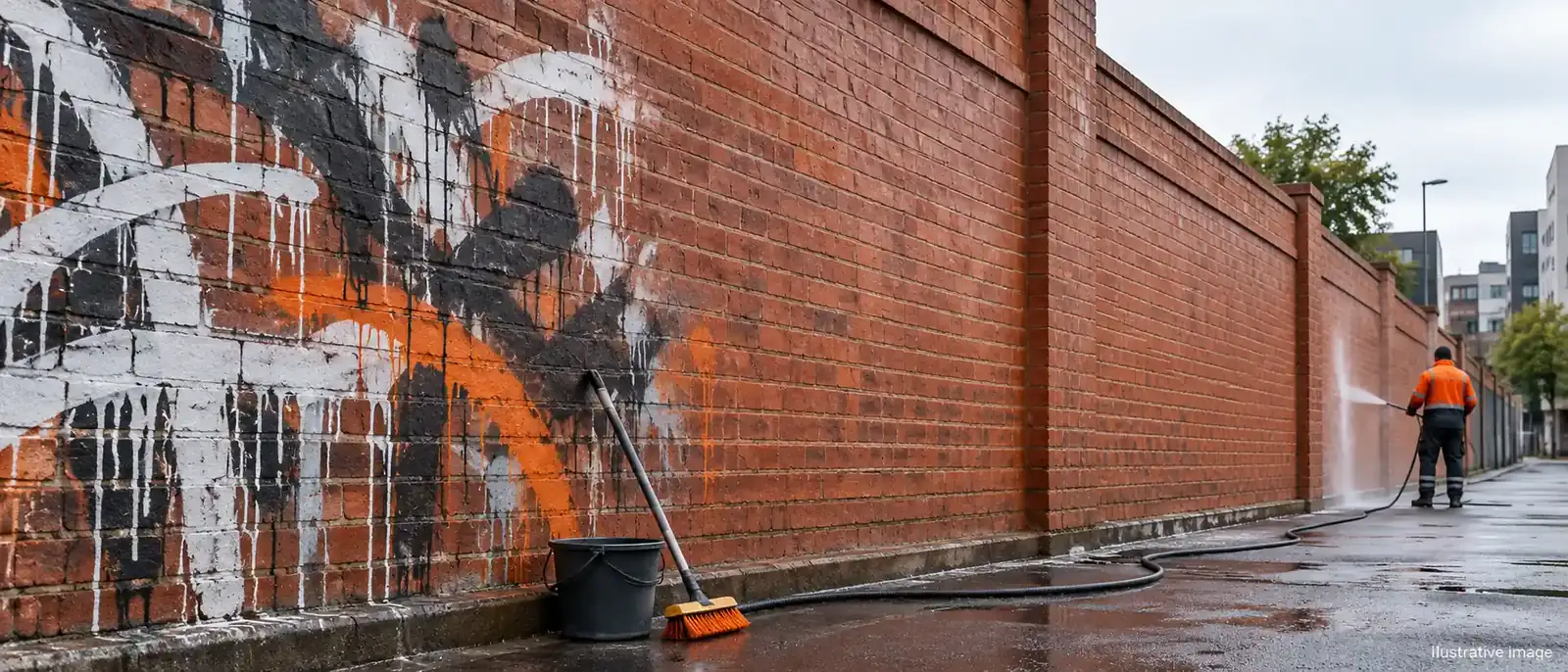
 Illustrative image
Graffiti Removal in Melbourne
Graffiti removal in Melbourne for businesses, councils, strata managers, schools and homeowners. Send a photo of the tag and the wall it's on, and we'll tell you how it comes off, what it will cost and how soon a crew can be there. Brick, render, metal and glass, each cleaned with the gentlest method that works.
- Test patch before every cleanWe prove the method on a hidden spot first.
- Public liability insuredCertificate of currency sent on request.
- Priced from a photoNo site visit needed for most jobs.
- Offensive graffiti goes firstFlag it and it jumps the queue.
Graffiti comes off cleanest in the first few days. Leave it a month and the paint hardens, sinks deeper into the brick and tells the next person with a spray can that nobody is watching.
We're graffiti removal specialists, and it's the only work we do. The job is less about muscle than judgement: which remover suits aerosol on face brick, how long it should sit, how much pressure a 1920s shopfront can take, and when a paint-out is the honest answer.
Most quotes start with a photo from your phone. We look at the surface, the paint and the size, reply with a fixed price, and book a time that suits your trading hours. Commercial sites can go on a standing program, so new tags are gone before most people notice them.
Get a free quote from a photoWhat does graffiti removal in Melbourne involve?
Graffiti removal in Melbourne means taking paint, marker or etching off a surface without harming what's underneath. A good job starts with a test patch, uses the mildest remover that shifts the paint, rinses at low pressure and leaves no ghost of the tag behind.
The work changes with the surface far more than with the size of the tag. Aerosol on glazed tiles lifts in minutes. The same paint on raw concrete or sandstone travels into the pores, so it needs a remover that can reach it, time to work, and a gentle rinse that draws it back out. Paint markers and etching fluids behave differently again, which is why we ask for a close-up photo.
Speed is the other half of it. Fresh paint hasn't fully cured, so it releases more easily and leaves less shadow. Clearing it quickly also takes away the reward: a tag that disappears within a day or two gets no audience, and sites that are cleaned fast tend to be hit less often. Councils say the same about their own buildings.
Professional graffiti removal also means cleaning up after ourselves: runoff caught where possible, removers chosen with the stormwater drain in mind, and the footpath rinsed before we leave.
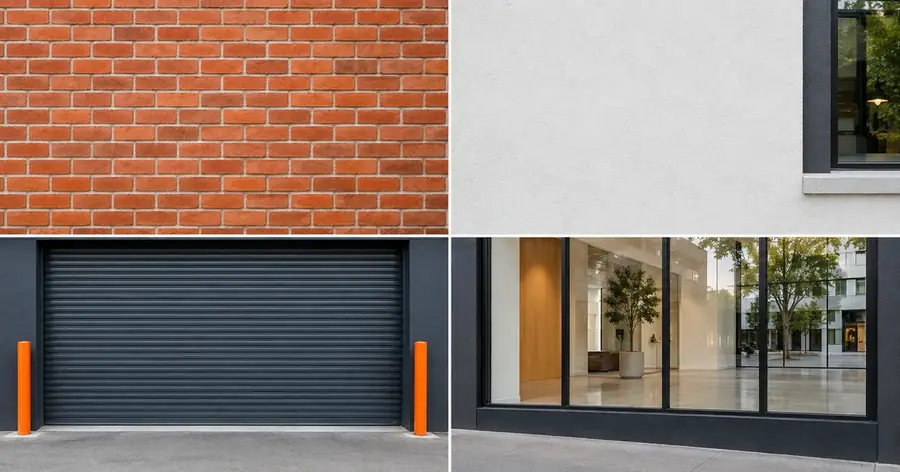
Who books graffiti clean up with us
Shops and retail strips
Roller doors, shutters and side walls cleaned before customers arrive.
Offices and warehouses
Loading docks, perimeter fences and car park walls, cleaned around shifts.
Strata and body corporates
Common property and letterbox banks, with photos sent to the manager.
Schools and childcare
Tags gone before students arrive, with anything offensive dealt with first and out of hours.
Councils and public assets
Overflow work, hard-to-reach spots and specialist surfaces such as heritage stone and etched glass.
Homes and fences
Colorbond, rendered front walls and timber palings, colour-matched where needed.
Which graffiti removal services can you book?
You can book one-off removal, a standing program for commercial sites, acid-etched glass restoration, masonry and heritage stone cleaning, anti-graffiti coatings and priority attendance for offensive graffiti. Every graffiti removal service we offer starts the same way, with a photo and a fixed quote.
 Business
Commercial and strata programs
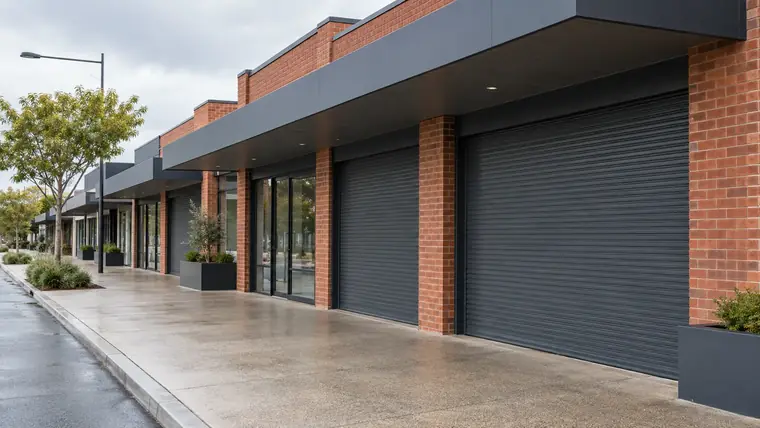
Shops, offices, warehouses and apartment buildings, cleaned once or on a program with agreed response times and photo reports.
Commercial graffiti removal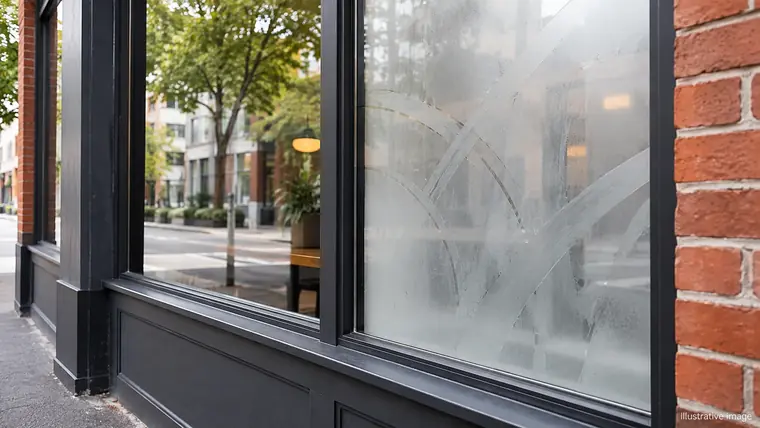 Glass
Acid-etched glass
Etching acid eats into the glass, so it can't be washed off. Light etching can often be polished back; deep etching may mean a new pane.
Acid-etched glass graffiti removal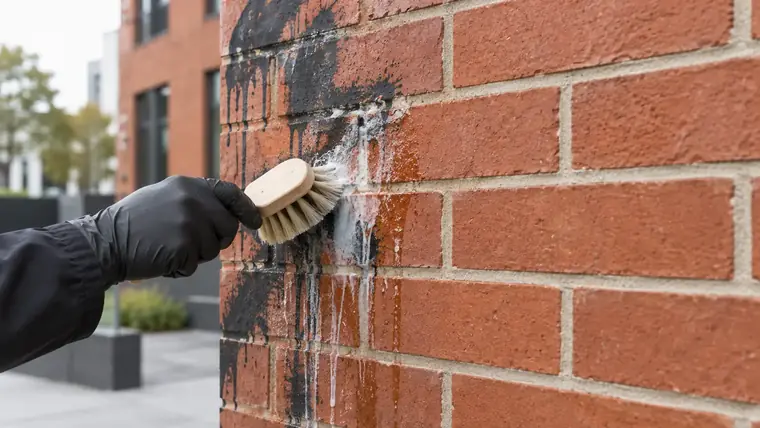 Masonry
Brick, concrete and render
The most common surfaces and the hardest to get perfect. Dwell-time removers and low-pressure hot water lift paint out of the pores without scarring the face.
Graffiti removal from brick, concrete and stone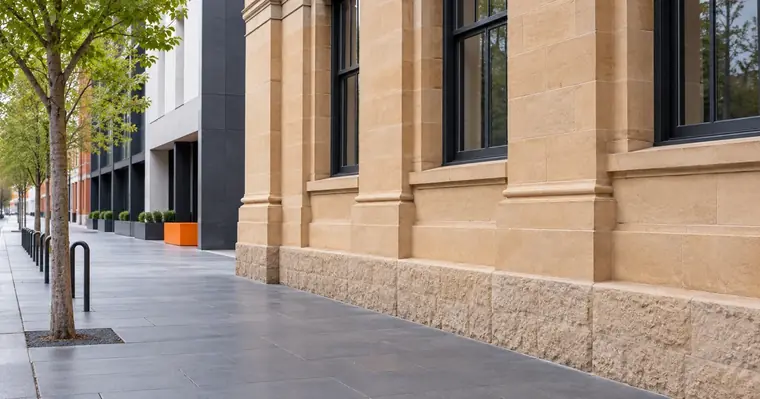 Heritage
Sandstone and heritage fabric
Soft stone and lime mortar need milder chemistry and far lower pressure. Listed buildings are handled under heritage guidance.
Heritage stone methods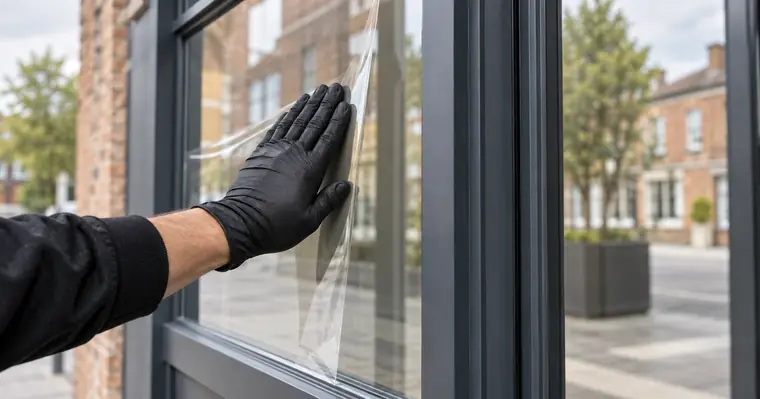 Prevention
Coatings and glass film
Clear coatings on walls and sacrificial film on glass, so the next attack is quicker and cheaper to deal with than the last one was.
Compare coating types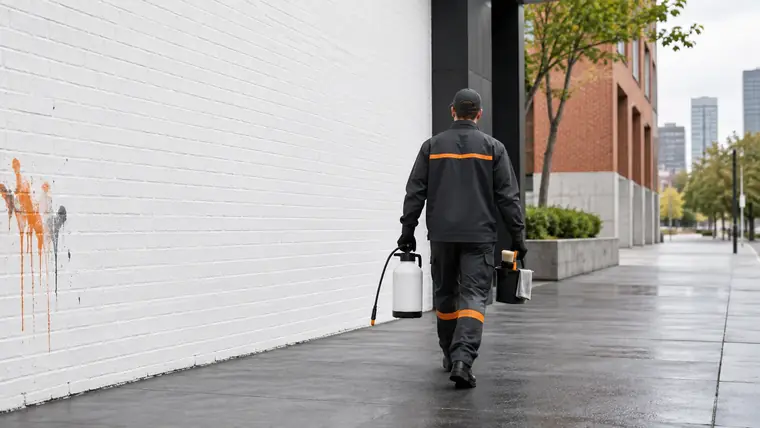 Priority
Offensive graffiti, first
Racist, sexual or threatening graffiti is flagged on the form and moved to the front of the queue.
How priority removal worksComparing graffiti removal companies? Ask to see the test patch, ask what happens if a faint ghost remains, and ask whether the price covers a second visit. The best graffiti removal leaves a wall that looks like nothing happened.
How do we match the method to the surface?
Graffiti removal is matched to the surface and the paint. Smooth, sealed surfaces get mild solvents and a wipe. Porous brick, concrete and stone get dwell-time removers and a low-pressure rinse. Painted walls get a colour-matched paint-out whenever stronger chemistry would do harm.
Face brick and blockwork
- Start with
- A gel remover left to dwell for 10 to 30 minutes, worked in with a soft brush.
- Step up to
- A low-pressure hot water rinse, then a poultice for any shadow left in the mortar.
- Never
- Wire brushes, sandblasting or high pressure near the joints.
- Ghost risk
- Medium
Concrete and bare render
- Start with
- A penetrating remover on raw concrete, or a milder product on bagged and sealed render.
- Step up to
- A poultice that pulls pigment out of deep pores as it dries, followed by a warm rinse.
- Never
- Acid washing, which leaves a bright square that stands out for years.
- Ghost risk
- Medium to high
Painted walls
- Start with
- A light solvent test to see whether the tag lifts without softening the paint beneath it.
- Step up to
- A paint-out in a matched colour, cut to natural edges rather than a patchy square.
- Never
- Strong strippers that take the building's own paint off along with the tag.
- Ghost risk
- Low once painted
Sandstone and limestone
- Start with
- A heritage-grade remover, trialled on a hidden patch and kept damp while it works.
- Step up to
- Poultices and several light passes, never one heavy one.
- Never
- Anything abrasive, or water pressure much beyond a firm garden-hose feel.
- Ghost risk
- High on old stone
Metal, roller doors and Colorbond
- Start with
- A mild graffiti wipe or citrus-based solvent, trialled on a corner of the sheet.
- Step up to
- A second product, used only if the factory coating shows no softening or dulling.
- Never
- Thinners, acetone or scourers, which strip the baked finish.
- Ghost risk
- Low
Glass and shopfronts
- Start with
- A fresh blade and a glass-safe solvent, with the pane kept wet.
- Step up to
- For etching, abrasive polishing or an honest assessment of whether the pane should be replaced.
- Never
- Dry scraping, which drags grit across the pane.
- Ghost risk
- None for paint
Gentlest method first
- 1
Test patch
A small hidden area shows how the paint and the surface react.
- 2
Mild remover
The weakest product that shifts the paint, given time to work.
- 3
Warm, low-pressure rinse
Heat does the work instead of force, so the face stays intact.
- 4
Poultice
A paste that draws stubborn pigment out of porous stone as it dries.
- 5
Paint-out
When chemistry would harm the surface, a matched coat is the honest fix.
Heritage Victoria asks for a trial before it approves full removal on registered places (see its guidance on managing graffiti at heritage places). We work the same way on every wall, listed or not.
Trying it yourself first?
How fast can graffiti be removed?
We aim to reply to photo quotes within one business day and book most jobs within two to three days. Offensive, racist or threatening graffiti gets priority and is often removed the same day or the next morning. The sooner we start, the faster and cleaner it comes off.
A search for emergency graffiti removal near me is usually made at 7am outside a shop that opens at 9. Tell us that on the form. If a crew is nearby we'll try to beat opening time, and if we can't, we'll say so straight away.
Time also changes the job. Aerosol dries in minutes but keeps curing for days, and summer sun bakes pigment into porous surfaces, so a weekend tag and one left since winter are very different jobs.
First 48 hours
The paint is still soft under its skin. Mild removers work quickly and ghosting is rare.
EasiestOne to two weeks
Cured paint needs longer dwell times, but most surfaces still come up clean.
RoutineOne to three months
Sun has driven pigment into the pores. Expect extra passes and a higher chance of a faint shadow.
HarderSix months or more
New tags have usually joined the first one. Paint-out or restoration can now cost more than a prompt clean would have.
Costliest
Offensive graffiti goes first
Tick the box on the form if the graffiti is racist, sexual, threatening or aimed at a person. Those jobs jump the queue, and where removal can't happen that day we can cover it temporarily. If it threatens someone, report it to Victoria Police too.
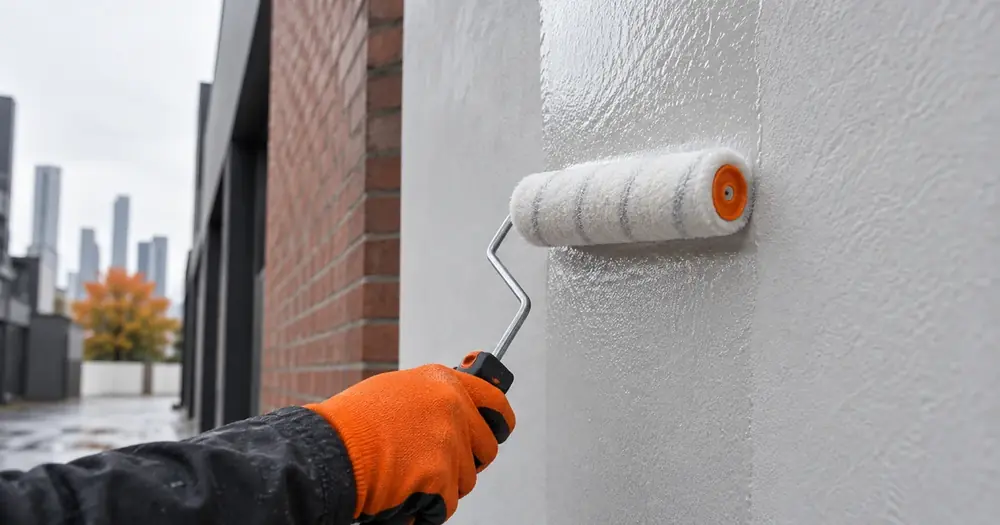
Are anti-graffiti coatings worth it?
Anti-graffiti coatings are worth it on walls that are hit more than once or twice a year. They stop paint bonding to the surface, so each later removal is quicker, uses milder products and costs less. On a wall tagged once a decade, they rarely pay for themselves.
There are two main families. Sacrificial coatings are clear, breathable layers that come away with the graffiti and are reapplied afterwards. Permanent, or non-sacrificial, coatings stay put and let paint be washed off again and again. Semi-sacrificial products sit between the two.
Porous brick and heritage stone need to breathe, and a coating that traps moisture can cause flaking later. Smooth metal and painted render suit permanent coatings. Anti-graffiti removal is a real job too: an old, yellowed coating sometimes has to be stripped before a wall can be cleaned or recoated. On glass, clear film does the same job, and etching acid eats the film instead of the pane.
| Type | How it works | After an attack | Best suited to | Watch for |
|---|---|---|---|---|
| Sacrificial | A clear, breathable wax or polysaccharide layer | Washed off with the paint, then reapplied | Porous brick, sandstone and heritage fabric | Reapplication cost after every clean |
| Semi-sacrificial | A tougher layer that survives a few cleans | Top layer may need a patch recoat | Concrete, blockwork and bare render | Can darken some surfaces slightly |
| Permanent | A hard film that paint can't bite into | Wiped or washed clean, no recoat needed | Metal, painted render, signage and roller doors | Traps moisture in damp or heritage walls |
| Glass film | A clear, replaceable film on the outside of the pane | Damaged film is peeled off and replaced | Shopfronts, bus shelter style glazing, lift doors | Edges must be sealed |
Will your council remove graffiti for free?
Sometimes. Victorian councils may remove graffiti from private property when it can be seen from a public place, but the law doesn't require them to. Most only clean what their crews can reach from the footpath, when resources allow, and you're entitled to say no.
The Graffiti Prevention Act 2007 gives councils the power, not the duty. Before working on private property they must give notice: at least 10 days when they can work from outside the boundary, and 28 days if they need to come onto the land. Owners can object, and if they do, the council can't go ahead (Victoria Legal Aid explains this on its removing graffiti page).
Each council then sets its own limits. Glen Eira, for example, removes graffiti visible from a public place where resources allow, but not above 1.8 metres, not where crews would need to go down a driveway, and on painted walls it paints a neat rectangle from a limited colour range. The free option is real and worth checking for a low tag on a front fence.
| Where the graffiti is | Who usually handles it | Worth knowing |
|---|---|---|
| Council buildings, footpaths and park furniture | Your local council | Report it through Snap Send Solve |
| Private walls and fences seen from the street | The council may, after notice; otherwise the owner | Height and colour rules vary |
| Bus shelters | The company that operates the shelter | Details are usually on the shelter |
| Red street posting boxes | Australia Post | Not a council job |
| Stations, rail bridges and overpasses | Metro Trains | Never enter the rail corridor to clean it yourself |
| Power poles and street lights | The local electricity distributor | Your council knows which one |
| Inside your boundary, up high, on glass or heritage stone | The owner, usually through a contractor | This is where we come in |
Call us when the graffiti is out of the council's reach, keeps coming back, sits on glass or old stone, or needs a colour that actually matches. We'll also tell you when the council is the better first call.
How much does graffiti removal cost in Melbourne?
Most small graffiti removal jobs in Melbourne cost $180 to $380, which is the minimum call-out. Larger areas are priced per square metre: roughly $30 to $65 on smooth sealed surfaces, $45 to $95 on brick and concrete, and considerably more on sandstone or heritage masonry.
| Surface or job | Guide price | What drives it |
|---|---|---|
| Minimum call-out | $180 to $380 a visit | Travel, setup and products for a small tag with easy access |
| Metal, Colorbond, sealed render, paint on glass | $30 to $65 per m² | Quick solvent work with little risk of a shadow |
| Face brick and blockwork | $45 to $95 per m² | Dwell time, a hot water rinse and cleaning out mortar joints |
| Raw concrete | $40 to $90 per m² | Porosity, and whether a poultice is needed for deep pigment |
| Painted walls (colour-matched paint-out) | $35 to $70 per m² | Colour matching, number of coats and clean cut-in edges |
| Sandstone, limestone and heritage brick | $100 to $260 per m² | Heritage-grade products, trials and slow, repeated passes |
| Acid-etched glass | Per pane, from a photo | Depth of the etch, pane size, and polishing versus replacement |
Tap the wall to size your job
Each brick below stands for one square metre. Tap or drag across the bricks the graffiti covers, then choose the surface.
Surface and access move a price more than size. A 2 m² tag on a Colorbond fence at ground level is a minimum call-out job. The same tag three metres up a sandstone wall needs a lift, heritage products and several passes.
These are guide figures based on typical Melbourne pricing in 2026, not a quote. Yours is fixed in writing first, and the graffiti removal cost page covers glass restoration and extras such as night work.
Which parts of Melbourne do you cover?
Our crews work right across greater Melbourne, reaching Werribee in the west, Craigieburn to the north, Lilydale in the east and Pakenham and Frankston to the south-east. Graffiti removal and cleaning in the Melbourne CBD is usually booked before 7am or after close, when laneways are quiet.
Laneway walls, shop shutters and bin rooms, usually cleaned before trading starts.
- Melbourne CBD
- Southbank
- Docklands
- Carlton
- Fitzroy
- Collingwood
- Richmond
- South Melbourne
Terrace fronts, corner shops and the bluestone lanes behind them.
- Brunswick
- Coburg
- Northcote
- Preston
- Reservoir
- Broadmeadows
- Craigieburn
Industrial estates, long perimeter fences and Colorbond in newer estates.
- Footscray
- Sunshine
- Altona
- Laverton
- Werribee
- Point Cook
Shopping strips, schools and rendered front walls on leafy streets.
- Hawthorn
- Box Hill
- Doncaster
- Ringwood
- Lilydale
Warehouses, rail-side fences and the walls around big retail centres.
- Caulfield
- Oakleigh
- Clayton
- Dandenong
- Pakenham
Beachside shopping strips, apartment blocks and foreshore car parks.
- St Kilda
- Brighton
- Cheltenham
- Mordialloc
- Frankston
Searching for graffiti removal services near me from a suburb that isn't listed? Send the photo anyway. If you're too far out, we'll say so rather than charge you for the drive.
How do I send a photo for a quote?
Take one photo close enough to show the paint and the texture, add a second from further back, and send both through the form with your suburb. We reply with the method we'd use, a fixed price and the earliest time we can come.
- 1
Snap it
A close-up for the paint, and a wide shot for size and access.
- 2
Send it
Add your suburb, the surface if you know it, and tell us if the graffiti is offensive or urgent.
- 3
Get it booked
You get a written price and a time that suits your trading hours.
Photos are enough for most jobs. We only visit first for heritage listings, lift or scaffold work, or etched glass. Quotes are free with no obligation. Want to know more first? Read about us and our equipment, browse the graffiti removal FAQ, or head straight to Get a quote.
Send us the wall
What do people ask before booking graffiti removal?
How much does graffiti removal cost?
Will removal damage my wall?
How fast can you come?
Does the council remove graffiti for free?
Can you remove graffiti from glass?
Do you apply anti-graffiti coatings?
Graffiti on your wall this morning?Send a photo now and get a price back, usually within the business day.