
Graffiti Removal from Brick, Concrete and Stone
Graffiti removal from brick, concrete, render and stone across Melbourne, done with the mildest remover that works and a warm, low-pressure rinse. Porous masonry holds paint deeper than any other surface, so we test first, explain any risk of ghosting up front, and keep the runoff out of the drains.
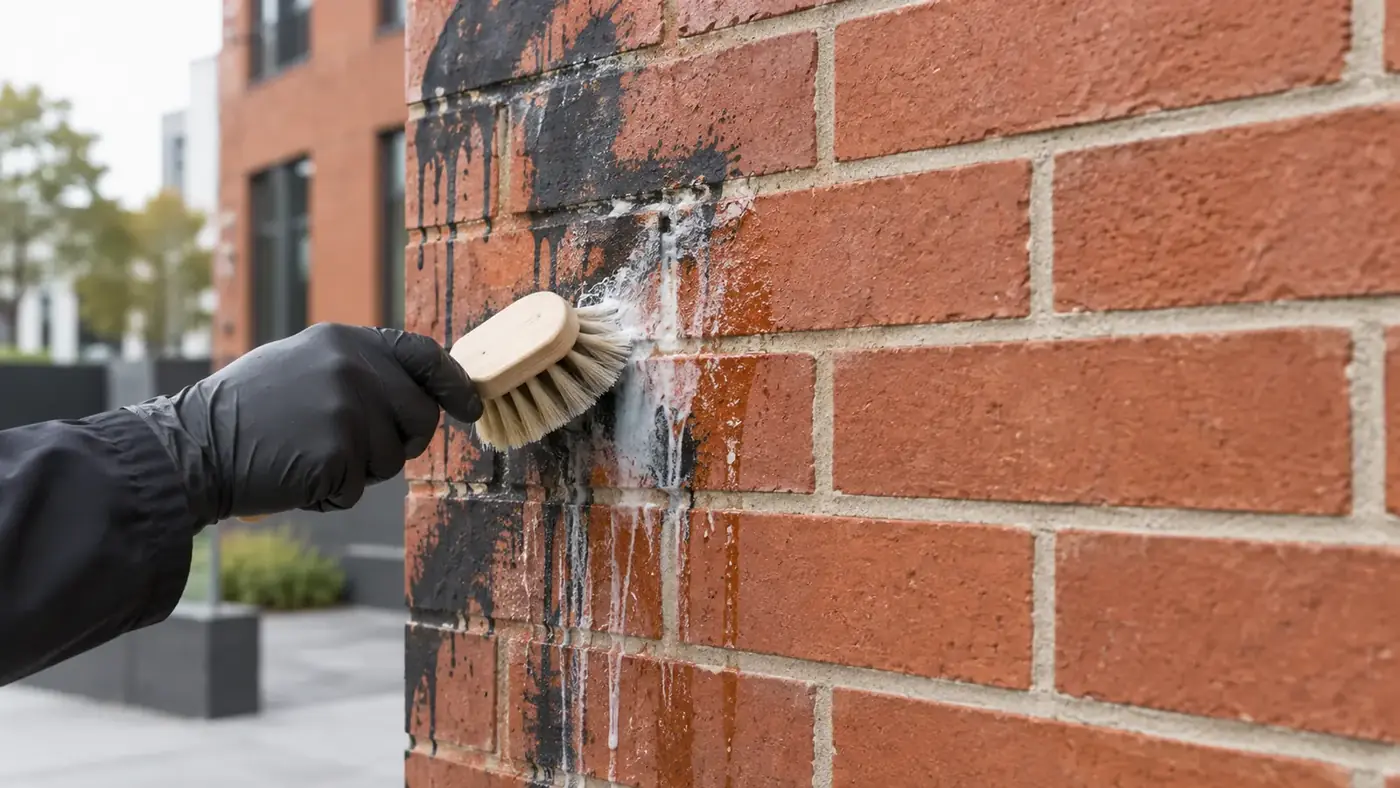 Illustrative image
- Test patchOn every wall
- RinseWarm, low pressure
- Heritage fabricTrial before work
- RunoffKept out of drains
Brick and concrete are the surfaces Melbourne's taggers hit most, and they're the hardest to get perfectly clean. Both are full of tiny pores. Aerosol paint soaks into them, and every week it sits there it cures a little deeper, which is why a wall cleaned the day after it's tagged usually looks better than one left for a season.
Here we explain how we approach porous masonry, from new face brick to 1880s bluestone, what ghosting is and how we deal with it, and which removers we reach for. Glass, metal and the rest of what we clean are covered on the graffiti removal in Melbourne home page.
How does graffiti removal from brick and concrete work?
Graffiti removal from brick and concrete relies on dwell time rather than force. A remover is brushed into the surface and left to soften the paint inside the pores, then rinsed off with warm water at low pressure, and the cycle is repeated until the masonry is clean or only a faint shadow remains.
How far paint soaks in (rule of thumb)
- Glazed brick or tileSits on the surface and lifts quickly.
- Pressed face brickStays mostly near the fired face.
- BluestoneDense basalt, but paint settles into its vesicles.
- Raw concreteVaries a lot with finish, age and any sealer.
- Mortar joints and concrete blockOpen texture that drinks paint, often the last part to come clean.
- Sandstone and limestoneSoft and thirsty, the slowest to clear fully.
Every masonry surface drinks paint differently. Hard pressed brick and glazed tiles hold it near the surface. Sandstone, limestone, concrete block and bare render let it travel deeper, sometimes several millimetres. The deeper it goes, the longer the remover needs to sit and the more passes it takes, and that's what drives both the time on site and the chance of a shadow.
The type of paint matters too. Standard aerosol lifts reasonably well. Enamel, bitumen-based paints and paint markers with strong pigment need different chemistry, and layered tags built up over months behave almost like a coating. We ask how long the graffiti has been there for exactly that reason.
On price, face brick and blockwork usually run $45 to $95 per square metre, with a minimum call-out for small tags. The graffiti removal cost page puts that beside every other surface.
Why do we always start with the gentlest method?
Because masonry can't be put back once it's damaged. High pressure, wire brushes and harsh acids can strip the fired face off brick, wash out mortar and scar concrete, leaving a clean but permanently marked patch. Starting gentle and stepping up only when needed keeps the wall intact.
It's also what heritage specialists recommend for older walls. Heritage Victoria's leaflet on cleaning masonry says testing should come before any large-scale cleaning, and treats water with a bristle brush as the simplest and safest place to begin. We apply the same thinking to a 1990s warehouse as to a Victorian terrace.
Water pressure isn't the enemy on its own. What matters is how close the wand is, how hot the water is and how long the remover has been allowed to work. Warm water held back from the face, after a proper dwell, lifts far more paint than a cold, hard blast and leaves the brick's fired skin where it belongs.
- 1
Test patch
About 10 minutesA small, out-of-sight square tells us which product and dwell suit this wall.
- 2
Remover on
Brushed inWorked into the texture and the mortar joints with a soft brush.
- 3
Dwell
10 to 45 minutesLonger on stone and on paint that has cured for weeks.
- 4
Warm rinse
Low pressureWand held well back from the face, working from the top down.
- 5
Second pass
Only if neededA repeat, or an overnight poultice on stone, for any shadow left.
Never on brickSandblastingWire brushesAcid washes on coloured brickA pressure tip close to mortar
Will a ghost of the graffiti be left behind?
Sometimes, and we'd rather tell you now than surprise you later. Ghosting is a faint shadow of the tag left where pigment has soaked too deep to lift fully. It's most likely on old paint, pale stone and very porous brick, and it can usually be reduced a long way.
Clean
No trace in any light. The usual result on fresh paint and dense brick.
Faint shadow
Only visible up close or in low sun. A second pass normally clears it.
Visible shadow
Pigment deep in pale or soft stone. Poultices over a day or two reduce it.
Paint-out
On render that's already painted, a colour-matched coat is the honest fix.
Sunlight helps as well. A light shadow on a north-facing wall often fades further over the following weeks, so sometimes the best advice is to stop at a faint trace rather than keep working the surface and risk damaging it. If we think a shadow is likely, you'll hear that in the quote, not after the invoice.
Render needs its own call. Bare cement render behaves much like concrete and responds to the same dwell-and-rinse approach. Painted render is different: a product strong enough to lift the tag will usually lift the paint underneath as well, so the tidy answer is a colour-matched paint-out, cut to a natural break such as a downpipe, window reveal or corner rather than a square patch.
How do you handle heritage brick and soft stone?
Slowly, and with a trial first. Soft handmade brick, lime mortar, sandstone and limestone all damage easily, so we use heritage-grade removers, poultices and very gentle rinsing, and test on a hidden area before touching the main face of the wall.
| Material | Main risk | How we treat it |
|---|---|---|
| Bluestone | Dark stains that spread if paint is chased around | Patience and poultices, never a hard blast |
| Handmade and polychrome brick | Soft faces that a pressure tip can pit in seconds | Gel removers, soft brushes, rinse from a distance |
| Lime mortar and tuckpointing | Softer than the brick, so it washes out first | Shielded from direct spray and cleaned by hand |
| Sandstone and limestone | Deep pigment and a surface that crumbles if scrubbed | Poultices spread over more than one visit |
If a building is on the Victorian Heritage Register, the owner may need approval before full removal, and Heritage Victoria's guidance on graffiti at heritage places asks for a test before that happens. We can prepare trial photos and a short method statement to support the application.
Are eco-friendly graffiti removers any good?
Yes, on the right job. Biodegradable, low-odour removers based on plant solvents or water-based chemistry work well on fresh aerosol and porous masonry, provided they get enough dwell time. On old or layered paint they're slower, and sometimes a stronger product used sparingly does less harm overall.
| Remover or method | Works best on | Trade-off |
|---|---|---|
| Citrus or soy-based gels | Fresh aerosol on brick and concrete | Slower on cured paint and needs a longer dwell |
| Water-based alkaline removers | Porous masonry and larger areas | Has to be rinsed thoroughly and kept off glass and metal trim |
| Solvent-based removers | Old, layered or enamel paint | Stronger odour, so used sparingly with runoff captured |
| Poultice pastes | Shadows in stone and pale concrete | Takes hours or overnight to draw pigment out |
| Warm water and a brush | Chalk, some markers and very fresh paint | Won't shift cured aerosol on its own |
Eco-friendly doesn't mean it can go down the drain. EPA Victoria treats anything other than rainwater entering a street drain as pollution, so our rinse water is kept out of the pits and collected for proper disposal whatever product we use. That applies to a small tag on a front fence as much as to a warehouse wall.
Low-odour products matter for a second reason: people nearby. Cafes with footpath seating, school playgrounds and apartment windows above a laneway all sit close to where we work, so on those sites we choose the gentlest-smelling option that will still do the job and plan the visit for quieter hours.
How do I send a photo of a brick or concrete wall?
Photograph the graffiti close enough to see the brick texture and mortar, add a wide shot of the whole wall, and tell us roughly how long the paint has been there. Age matters on masonry, because a week-old tag and a year-old tag are very different jobs.
- Get the mortar joints in frame, since paint in joints takes longest
- Point out any old patch repairs or paint-outs nearby
- Tell us if the building is heritage listed or over a century old
- Include the ground below so we can plan how to catch the runoff
Want to try a small tag yourself first? Our step-by-step guide to brick and concrete covers safe removers, dwell times and when to stop. If the paint hasn't moved after two careful attempts, that's the moment to call us, or head to Get a quote.
Show us the wall
What else do owners ask about masonry cleaning?
Will there be a shadow left?
Is pressure washing safe for brick?
Can you clean heritage brick?
Tagged brick or concrete? The sooner, the cleaner.Send a photo today and we'll tell you how much will come off, and how.