
Commercial Graffiti Removal
Commercial graffiti removal in Melbourne for shopfronts, offices, warehouses, schools, strata buildings and council assets. Book a single clean when a tag appears, or put your sites on a response program with agreed turnaround times, scheduled patrols and a photo report after every visit.
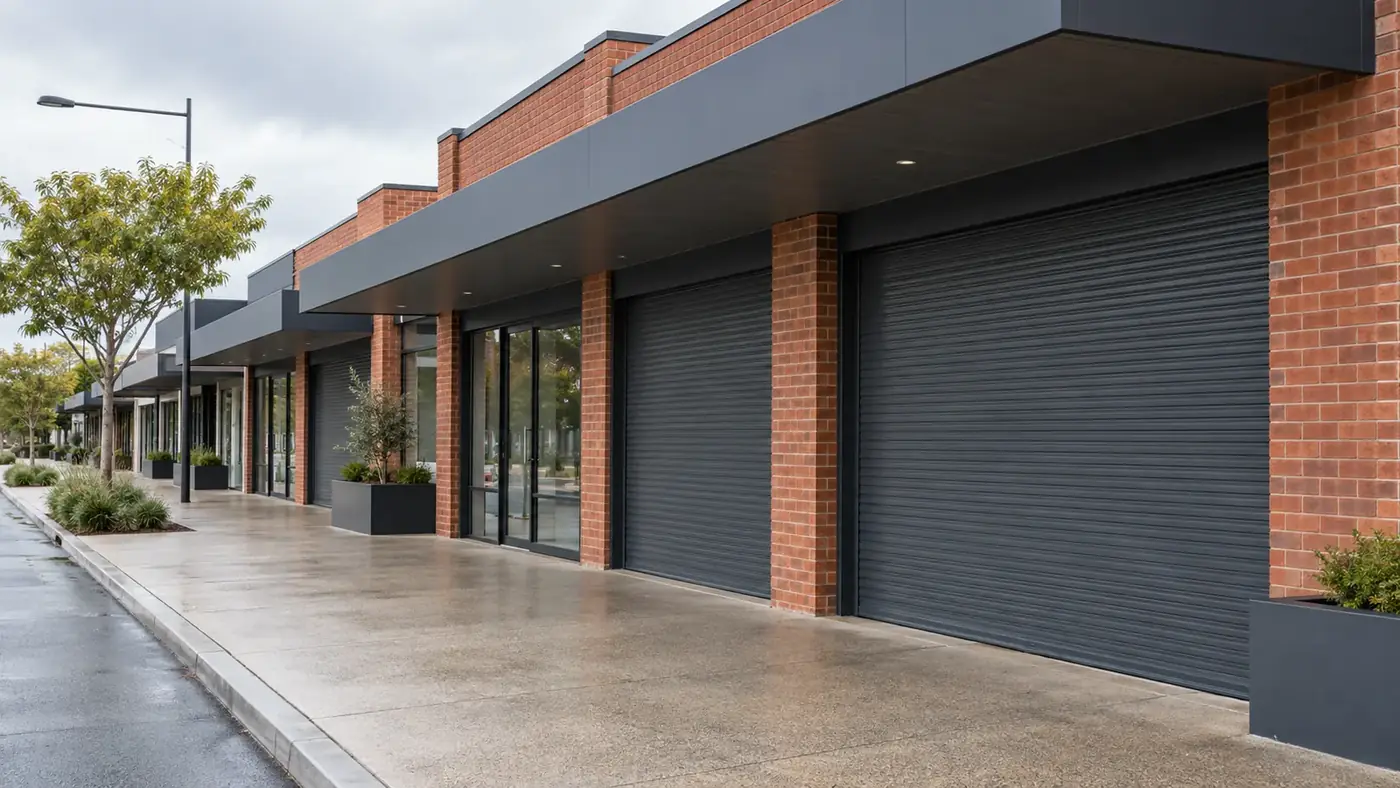 Illustrative image
- Offensive graffitiSame day where possible
- Standard call-out2 to 3 business days
- Program sitesSet in your agreement
- Photo reportAfter every visit
Graffiti on a business is a different problem from graffiti on a home. It sits in front of customers, tenants and staff for as long as it stays up, it tends to come back to the same walls, and whoever pays for removal usually has to justify the cost to someone else. That's why commercial work runs on schedules, response times and records rather than one-off favours.
This page explains how we run those programs for Melbourne businesses, owners corporations and public bodies, what they cost and how to get a site quote. For surfaces, methods and prices across every kind of job, see our main page on graffiti removal in Melbourne.
What does commercial graffiti removal in Melbourne cover?
Commercial graffiti removal in Melbourne covers any business, strata or public property where graffiti affects trade, tenants or reputation. That includes shopfronts, roller doors, loading docks, fences, car parks, school buildings, apartment common areas and council assets, cleaned in one visit or on a program.
What sets commercial sites apart is the pattern. Graffiti on a retail strip turns up after weekends. Industrial estates get long runs of fence tagged overnight. Schools see it during holidays, and apartment buildings get the same laneway wall again and again. A good commercial graffiti removal service plans around that pattern instead of treating each tag as a surprise.
| Site type | Usual targets | When we clean |
|---|---|---|
| Retail strips and shopping centres | Roller doors, shutters, side walls and signage | Before opening, usually between 6am and 9am |
| Offices and business parks | Entry walls, bin enclosures and car park levels | Before or after business hours |
| Warehouses and industrial estates | Perimeter fences, dock doors and tilt-up panels | Around shift changes, with a site induction if required |
| Schools and childcare centres | Toilet blocks, shade structures and sports walls | Before students arrive, or during holidays |
| Strata and apartment buildings | Laneway walls, letterbox banks and car park entries | At times agreed with the building manager |
| Councils and public bodies | Public toilets, underpasses and park furniture | As directed, with reporting per asset |
How do graffiti response programs work?
A response program is an agreement to keep one or more sites clear of graffiti. You choose how it gets found (your own reports, our scheduled patrols or both) and how fast we respond, and every visit is logged with before and after photos.
Some companies sell this as a graffiti removal system. The label matters less than the parts: a site list, a response time for each kind of graffiti, a fixed price per visit, and a record you can hand to a landlord, committee or insurer. Most of the graffiti removal solutions we set up for businesses are one of these three.
Single clean
A tag has appeared and you want it gone.
- Priced from your photo before we start
- Any surface, including glass and stone
- Before and after photos on request
Response 2 to 3 business days
Scheduled patrol
Sites hit regularly, such as retail strips and industrial fence lines.
- Weekly, fortnightly or monthly visits on a set route
- New graffiti removed on the visit, no call needed
- Fixed price per site visit, billed monthly
- Photo report emailed after each round
Response Next scheduled visit
Call-out agreement
Portfolios where graffiti is rare but has to go quickly when it shows up.
- Agreed rate card, no fresh quote each time
- Offensive graffiti moved to the front of the queue
- Reports sent to your inbox or asset system
Response Set in the agreement
Proof after every visit
Every visit ends with a short report: the site, the date and time on site, the surface, the method and product used, the area cleaned, and matched before and after photos. Managers use it to approve invoices, answer questions from owners and track which walls keep getting hit.
If you need a different format, tell us when we quote and the reports will follow it from the first visit. Formats clients already use with us:
- A PDF emailed after each visit or patrol round
- One spreadsheet row per asset, ready for your records
- Your work order or asset number on every line
- Photos grouped by site for committee meetings
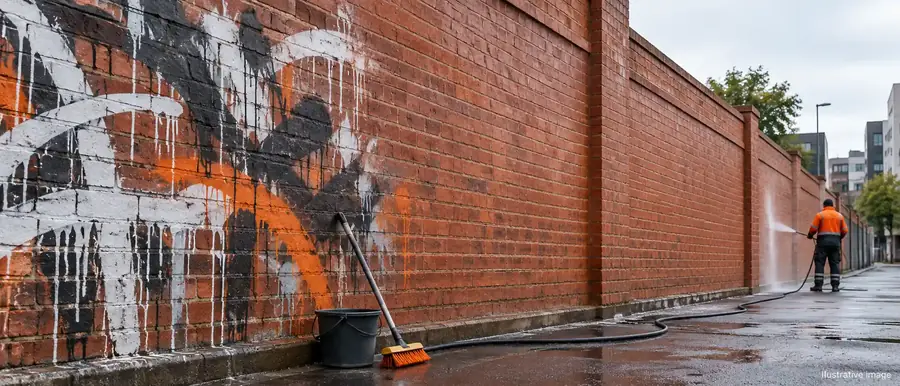
- Site
- Retail strip, rear laneway wall
- On site
- 6:10am to 6:55am
- Surface
- Face brick
- Method
- Gel remover, warm low-pressure rinse
- Area
- 3.5 m²
- Result
- Removed, no shadow left
How do you work with strata managers and councils?
With strata, we work through the owners corporation manager or committee, because common property is theirs to maintain. With councils, we work to the brief and reporting format in the contract, usually as overflow or specialist support for high walls, glass and heritage surfaces.
Strata and owners corporations
Under section 46 of the Owners Corporations Act 2006, an owners corporation must repair and maintain common property, and graffiti on a shared wall falls under that duty. Consumer Affairs Victoria also points out that lot owners can't repair or alter common property unless the owners corporation authorises it, so residents are better off reporting a tag than scrubbing it.
- Quotes addressed to the owners corporation, with photos for the committee
- Paint-outs matched to the building's existing colour scheme
- Coatings that would change how a wall looks raised with the manager first, as significant changes need the maintenance plan or a special resolution
- Letterbox banks, car park entries and laneway walls on one program
Councils and public bodies
Council crews clear most public graffiti themselves. Where we help is the work outside their standard kit: tags above a safe reach, etched glass in shelters and libraries, sandstone and bluestone in heritage precincts, and the surge that follows big events or long weekends. We also take on one-off clean-ups of a whole street or precinct ahead of openings, festivals and civic works.
- Reporting per asset, with location, time and photos
- Test patches before full removal on heritage fabric
- Night and early-morning work away from foot traffic
- Certificate of currency supplied with every quote
- Rates held for the full term of the contract
How do you stop a site being hit again and again?
You make the wall harder to reach, quicker to clean and less rewarding to tag. Fast removal does most of the work. Anti-graffiti coatings, better lighting and changes to the surface itself handle the rest on sites that keep attracting paint.
Victoria Police gives property owners a similar short list: reduce access to large blank surfaces, secure the site, and remove graffiti as soon as possible (see its advice on preventing and removing graffiti). It also asks you to photograph graffiti and tell police what it says when you report it. We photograph every tag before cleaning, so that record exists even when you're not on site.
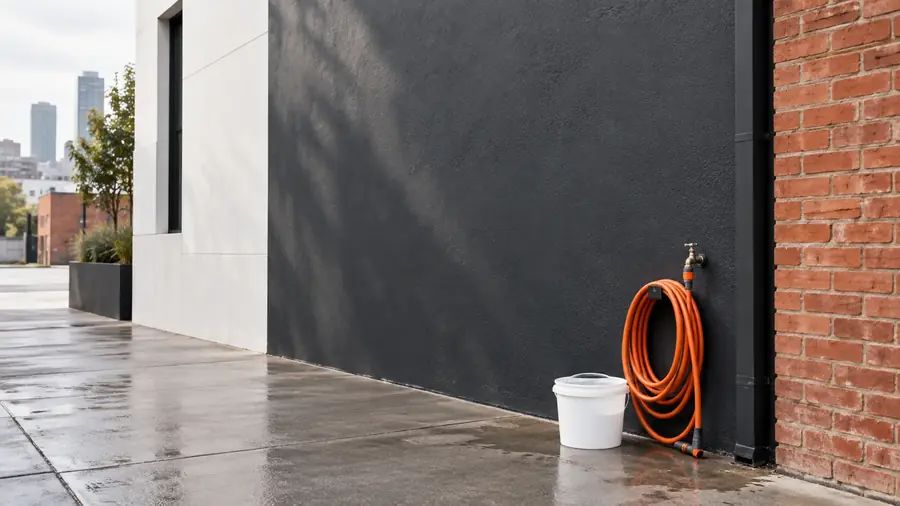
Coat the worst walls
With a sacrificial or permanent coating, the next tag washes off in minutes.
Film the glass
Clear film takes the scratching and etching instead of the shopfront pane.
Light the dark corners
Sensor lights and cameras on laneways, docks and car park ramps.
Break up blank surfaces
Texture, planting or screening makes a big plain wall less inviting.
Keep the response short
Walls cleaned within a day or two stop being worth the effort.
Keep a record
Dated photos help police, insurers and committees see the pattern.
On porous brick and concrete, a coating only goes on after a full clean, because paint trapped under it is there for good. Our page on graffiti removal from brick, concrete and stone explains how we get masonry properly clean first.
What does commercial graffiti removal cost?
A one-off commercial job starts at the same $180 to $380 minimum as any other visit, with larger areas priced per square metre. Program sites cost less per visit, because travel and setup are shared across a route, and they're billed at a fixed rate per site each month.
| Option | How it's priced | Guide |
|---|---|---|
| Single clean | Minimum call-out, then per m² by surface | $180 to $380 minimum |
| Scheduled patrol | Fixed rate per site per visit, invoiced monthly | $120 to $260 per site visit |
| Call-out agreement | Agreed rate card per attendance | Set when you sign |
| Anti-graffiti coating | Per m², after a test on your surface | Quoted with the program |
The biggest cost drivers are access and surface: a lift or scaffold for high walls, traffic management on busy roads, night work, and heritage fabric that needs slower methods. Our graffiti removal cost guide breaks the figures down by surface and size. Every price is agreed in writing before the first visit, and program rates are reviewed once a year rather than job by job.
How do I request a site quote?
Send a list of your sites with a photo of the worst wall at each, the type of property and how fast you need graffiti gone. We reply with a price per site, a suggested visit schedule and any access or induction questions, usually within one business day.
- 1
List the sites
Addresses or suburbs, and who looks after access at each one.
- 2
Add photos
A close-up and a wide shot of the worst-affected wall per site.
- 3
Pick a response
One-off, patrol or call-out, and how quickly offensive graffiti must go.
Not ready for a program? Start with one site and a single clean. Plenty of commercial clients move to a patrol once they see how often the same walls get hit. If it's easier, you can also use the main Get a quote page.
Tell us about your sites
What do businesses ask about graffiti programs?
Do you offer ongoing contracts?
How fast is your response?
Do you report with photos?
One wall or fifty sites, it starts with a photo.Send the worst wall and a list of addresses, and we'll build the program around them.