
How to Remove Graffiti from Brick and Concrete
If you're working out how to remove graffiti from brick or concrete at home, the rule is simple: let a masonry remover sit long enough to soften the paint inside the pores, keep it damp while it works, then rinse gently. Force is what damages walls. Time is what cleans them.
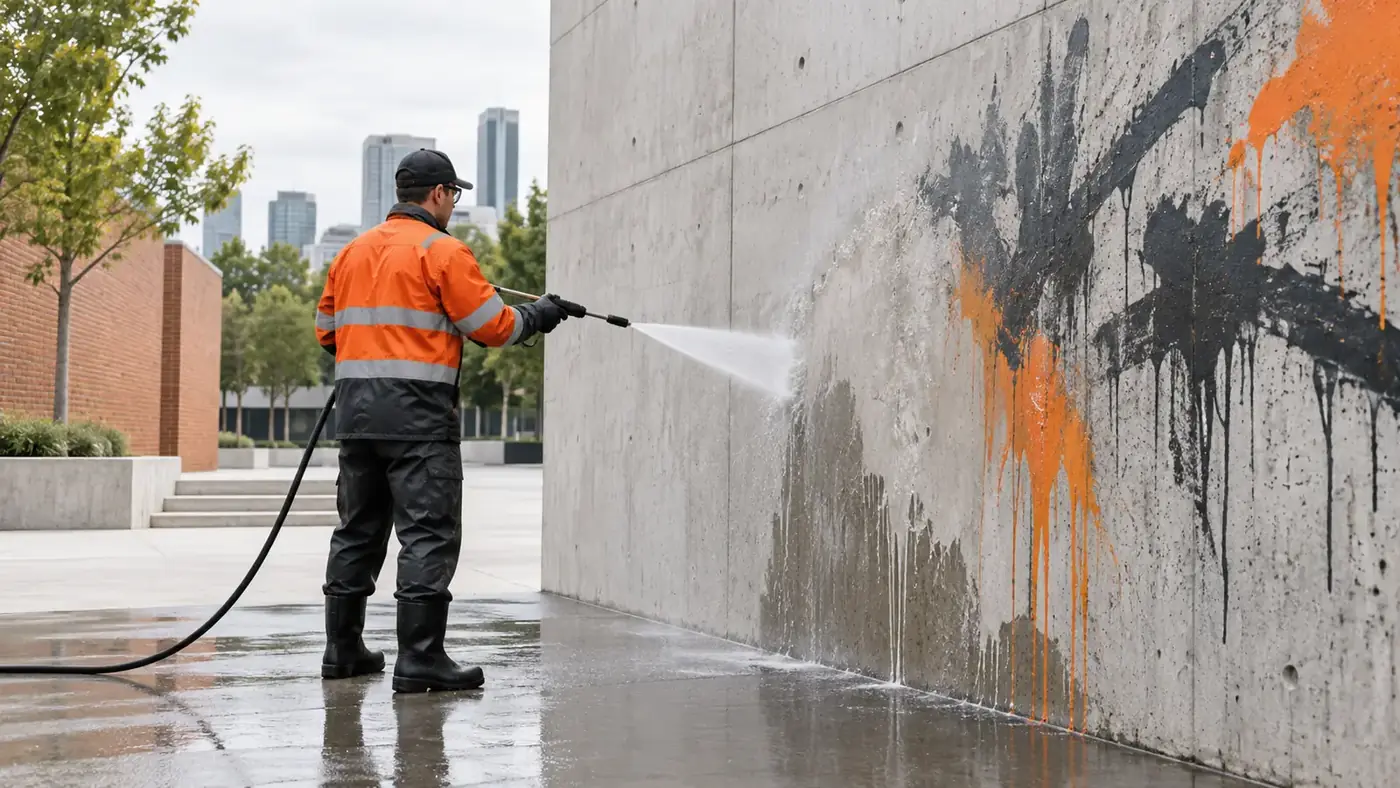 Illustrative image
- RemoverMasonry gel
- BrushStiff nylon, not wire
- CoverPlastic sheet
- RinseHose with a fan nozzle
Brick and concrete behave like a sponge. Aerosol paint doesn't sit on top of them; it soaks into the pores and the mortar joints, and the longer it stays, the deeper and harder it sets. That's why wiping or scrubbing achieves so little, and why the jobs that go wrong usually involve someone trying to force it out.
This guide is for face brick, blockwork and raw concrete you can reach from the ground, plus a section on limestone and sandstone. It sits alongside our general guide to DIY removal. For surfaces and services beyond masonry, see graffiti removal in Melbourne.
How to remove graffiti from brick: what works best?
The best way to remove graffiti from brick is a gel remover made for masonry, brushed into the brick and mortar, kept damp for its full dwell time, then rinsed from a distance with low-pressure water. Repeat once if needed. Concrete follows the same method; limestone and sandstone need gentler products.
Gels matter more on masonry than anywhere else. A thin liquid runs off a vertical wall before it has time to work and carries dissolved paint down into clean brick below. A gel clings where you put it, and covering it with plastic stops it drying in the sun, which is the most common reason a first attempt fails.
Before you start, work out what you're actually cleaning. Face brick, painted brick, rendered brick and sealed concrete look similar from the street but respond very differently, and a method that suits one can ruin another.
| Surface | How to tell | Approach |
|---|---|---|
| Face brick | Bare fired brick with visible mortar joints | Masonry gel, nylon brush, gentle rinse |
| Painted brick | Brick shape visible under a flat paint colour | Test mildly, then repaint to match |
| Rendered wall | Smooth or textured coat hiding the brick | Bare render like concrete; painted render gets a repaint |
| Raw concrete | Grey, slightly porous, no shine | Masonry gel with a longer dwell |
| Sealed concrete | Water beads up on the surface | Milder remover; the sealer may lift and need recoating |
| Limestone and sandstone | Soft, pale natural stone, often on older buildings | Neutral products only, or a professional |
What are the steps to clean graffiti off a brick wall?
Check the brick and mortar, test on a hidden spot, pre-wet the wall below, apply the gel generously, keep it covered and damp for the full dwell time, rinse from a distance, and judge the result only once the wall is dry. Allow one to three hours, including a second round.
- 1
Check the brick and mortar
Look for crumbling joints, flaking faces or old patch repairs. Weak mortar and soft brick need a lighter hand, and badly worn walls are best left to a professional.
TipPress a key into a joint; if it gouges easily, go gently. - 2
Test on a hidden brick
Put a little gel on a brick out of sight, let it work, rinse, and look again once it's dry. Colour change or a powdery surface means stop.
TipTest on the same brick type as the tagged area. - 3
Wet the brick below
Dampen the clean wall under the graffiti before you begin. Wet brick absorbs less, so paint that runs down is far less likely to stain it.
TipCheck the product label allows use on damp masonry. - 4
Apply the gel generously
Brush it on thickly with a stiff nylon brush, working it into the texture and the mortar joints, a little beyond the edges of the tag.
TipMortar joints hold paint longest, so give them extra. - 5
Cover and wait
Lay plastic sheet or cling wrap over the gel on warm or windy days, and leave it for the full label time. A remover that dries on the wall stops working.
TipOld paint may need the longest time the label allows. - 6
Rinse from a distance
Agitate with the brush, then rinse from the top with a hose on a wide fan setting, keeping the nozzle well back. Catch the runoff with towels.
TipWork across in bands so nothing dries in between. - 7
Judge it dry, then decide
Brick looks cleaner wet than it really is. Let the wall dry fully before deciding on a second round. If a faint shadow is all that's left, stopping there often looks better than pushing on and marking the face.
TipSun over the following weeks often softens a light shadow.
Concrete walls and driveways follow the same sequence, with two differences. Raw concrete usually wants the longest dwell time on the label, and sealed concrete may lose some of its sealer where you've cleaned, leaving a dull patch that needs resealing to blend in. Test on a corner of the slab first so you know what you're dealing with.
What damages brick and concrete during graffiti removal?
High pressure held close, wire brushes, sandblasting, acids and paint thinners do most of the damage. Each one either removes the hard outer face of the brick, washes out mortar, or spreads paint deeper into the pores, leaving a scar that's more visible than the tag ever was.
Hold a pressure tip close
A narrow jet cuts into joints and soft faces. Keep any pressure low, wide and well back.
Grab a wire brush
Steel bristles scratch the fired surface and leave rust flecks in pale brick.
Use brick acid on graffiti
Acid won't dissolve the paint, but it will burn and bleach the brick around it.
Splash thinners around
Liquid solvents carry dissolved paint deeper, turning a tag into a wide stain.
Paint over face brick
No paint matches bare brick. A painted square draws the eye far more than a faint shadow.
Let the gel dry out
Dried remover stops working and can leave a sticky film that traps dirt.
Limestone and sandstone need extra care. Both are soft, and limestone is made largely of calcium carbonate, which acidic cleaners dissolve outright. Use only neutral, stone-safe products, a soft brush and the gentlest rinse. On older or heritage stone, Heritage Victoria's leaflet on cleaning masonry is clear that testing should come before any larger clean, and that's the point to call in help.
| What you see | Likely cause | What to do |
|---|---|---|
| A shadow of the tag remains | Pigment deep in the pores | One more round with a longer dwell, then stop |
| Paint has spread wider | Remover too runny, or rinsed while still liquid paint | Use a thicker gel and pre-wet the brick around it |
| White haze after drying | Remover residue or salts drawn to the surface | Rinse again with clean water and a soft brush |
| Mortar looks paler or sandy | Too much pressure or scrubbing | Stop; the joints may need repointing |
| Nothing moved at all | Old, cured or layered paint | A professional with stronger chemistry and heat |
How do you stop brick and concrete being tagged again?
Remove new tags within a day or two, make big blank walls less inviting, and consider a breathable anti-graffiti coating on walls that get hit repeatedly. Masonry needs to let moisture out, so any coating on brick or stone should be a breathable, usually sacrificial, product.
Long, plain garden walls and side fences are the usual targets because they're visible and uninterrupted. Climbing plants, a hedge in front of the wall, or sensor lighting on a laneway all reduce their appeal. On concrete paths and driveways, which attract chalk and paint marker more than aerosol, a penetrating sealer makes the next clean far easier, as long as it's reapplied where you've scrubbed.
If a coating is on your list, apply it only after the wall is fully clean and dry. Anything left in the pores gets sealed in underneath, and a shadow under a coating is there for good. On heritage brick or stone, don't coat at all without advice, since a sealer that traps moisture can cause the face to flake over later winters.
When should brick and concrete go to a professional?
When the wall is heritage, soft or crumbling, when the graffiti is high or covers a large area, when two careful rounds haven't moved it, or when a shadow matters because the wall faces the street or customers. A professional can use heat, poultices and stronger removers without harming the face.
- The brick or mortar is soft, crumbling or more than a century old
- It's on limestone, sandstone or bluestone
- It's above head height or needs a ladder
- It's spread across two or three square metres or more
- Two rounds with a masonry gel barely shifted it
- You need it gone before customers or tenants see it
Where DIY hands over
At this point the risk of marking the wall outweighs the saving. Our graffiti removal from brick, concrete and stone service uses dwell-time chemistry, warm low-pressure rinsing and poultices, quoted as a fixed price from your photos.
Get a quoteWhatever you decide, keep the runoff out of the gutter. EPA Victoria counts cleaning water and chemicals entering stormwater as pollution, so soak it up with towels and bin them, or direct small amounts onto soil well away from any drain.