
Acid-Etched Glass Graffiti Removal
Etched tags on a shop window, lobby door or glass balustrade? Our acid-etched graffiti removal in Melbourne polishes light etching back to clear glass. Deep etching sometimes won't come out cleanly, and when a new pane is the cheaper fix, you hear that from us before any grinding starts.
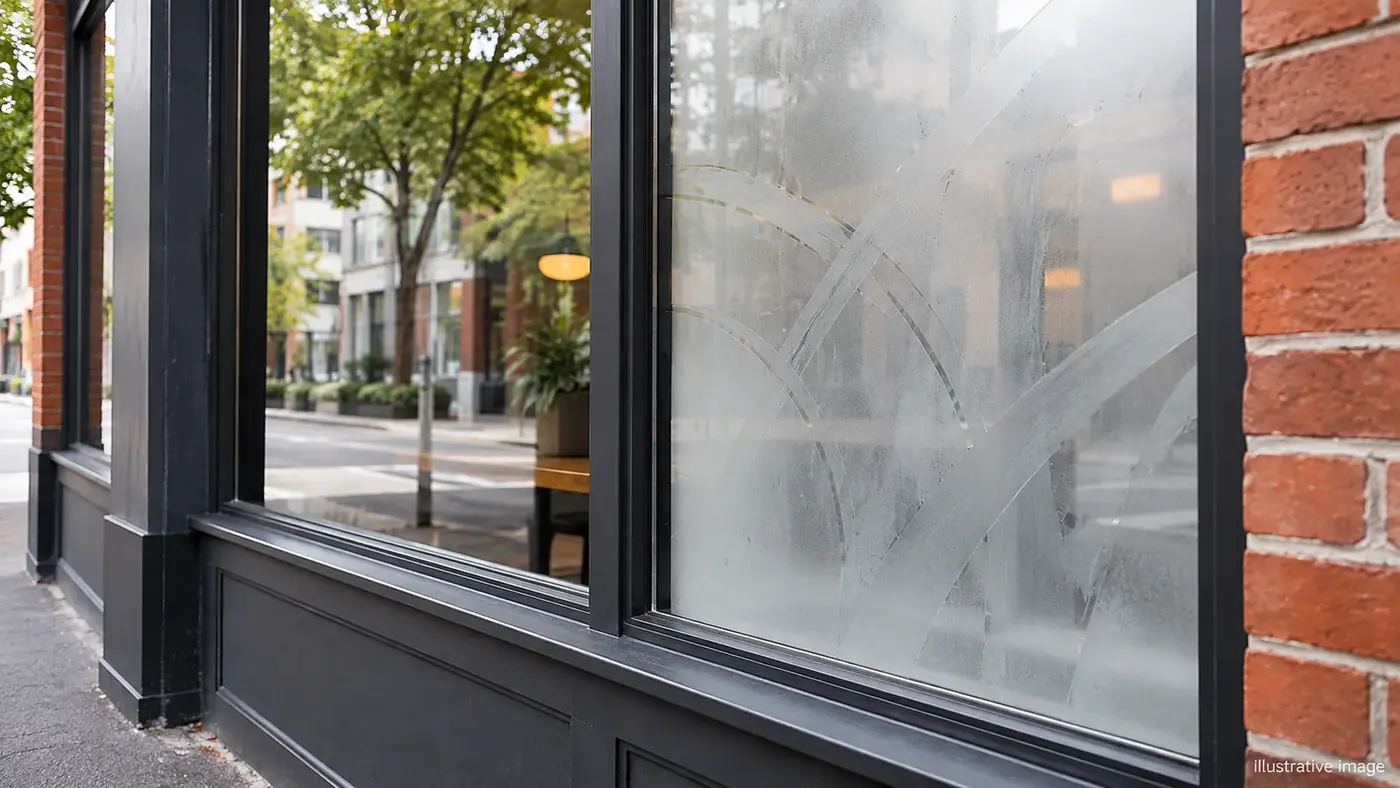 Illustrative image
- Paint or markerUsually one visit
- Light etchingOften polishes out
- Deep etchingMay need a new pane
- Protective filmTakes the next hit
Etching is the one kind of graffiti that can't be washed off, because it isn't sitting on the glass at all. The cream or liquid used for it attacks the glass itself and leaves a frosted, pitted scar. Getting rid of it means taking a very thin layer of glass away and polishing the surface back, which is slow, careful work.
This page covers what that process involves, what result is realistic, and when replacement or protective film makes more sense. For every other surface we clean, and how we approach them, see our overview of graffiti removal in Melbourne.
How does acid-etched graffiti removal in Melbourne work?
Acid-etched graffiti removal in Melbourne works by grinding away the damaged surface with progressively finer abrasives, then polishing the glass with cerium oxide until it's clear again. It's a controlled resurfacing job rather than a cleaning job, and it only works where the etching is shallow enough.
Etching creams are usually based on fluoride compounds that dissolve the silica in glass. They leave thousands of tiny pits that scatter light, which is why the mark looks white or frosted. Nothing sprayed or wiped on will fill those pits in a way that lasts. The glass has to be brought down to the depth of the deepest pit and polished flat.
Found fresh etching? Don't wipe it with bare hands. Etching products can contain hydrofluoric acid or compounds that release it, and WorkSafe Victoria warns that dilute solutions can get through skin without an immediate burning feeling. Rinse the glass with plenty of water, wear gloves, and leave the rest to us.
- 1
Inspect
Light, angle and a fingernail tell us how deep the marks go, and the corner stamp tells us the glass type.
- 2
Protect
Frames, seals and the footpath are masked, and the pane is kept wet so it stays cool.
- 3
Resurface
Abrasive pads work from coarse to fine over an area wider than the tag, so there's no visible dip.
- 4
Polish
Cerium oxide brings the surface back to clear, then we check it from inside and outside.
Can acid etching be fully removed?
Often, but not always. Light and moderate etching on clear glass usually polishes out completely. Deep etching can leave a faint ripple when you look through the pane at an angle, and coated, tinted or deeply etched toughened glass may not be worth resurfacing at all.
The quickest test is your fingernail. Run it across the marks. If it glides over, the damage is shallow and restoration normally works well. If it catches, the pits are deep enough that removing them means taking away enough glass to bend the light slightly, which some owners notice and many never do. We polish a small corner first so you can judge the result before we do the rest.
| Glass type | Can it be polished? | What to know |
|---|---|---|
| Clear float glass | Yes | The best candidate. Light to moderate etching normally comes out clean. |
| Laminated glass | Yes, the outer sheet | Only the outer sheet is resurfaced, so the interlayer is never touched. |
| Toughened glass | Light etching only | Its strength sits in a compressed surface layer, so we avoid deep grinding. |
| Low-E, reflective or coated glass | Not on the coated face | Polishing strips the coating and leaves a patch that looks different. |
| Tinted or filmed glass | Not the film | Damaged window film is peeled and replaced rather than polished. |
Look for a small stamp in one corner of the pane. Safety glass used in shopfronts is permanently marked, and the stamp tells a glazier whether it's toughened or laminated. A clear photo of it often saves a site visit.
Should you restore or replace etched glass?
Restore when the etching is light or moderate and the pane is large, costly or awkward to replace. Replace when deep etching covers most of the pane, when the glass is coated, or when a glazier can swap it for less than the hours of resurfacing would cost.
Answer three questions
Pick an option in each row
We'll suggest whether polishing or a new pane is likely to make more sense. A photo still decides it, so treat this as a first read.
Check it with a photo| Option | Best for | Guide cost | What you end up with |
|---|---|---|---|
| Polish light etching | A tag or two where a fingernail glides over | $200 to $450 per patch | Clear glass, usually with no visible trace |
| Polish deep etching | Small deep marks on large or specialty panes | Quoted after a test | Clear glass, sometimes with a faint ripple at an angle |
| Replace the pane | Deep etching across most of the glass, or coated glass | $400 to $1,200+ fitted | New glass, installed by a glazier to AS 1288 |
| Protective film | Any pane that has been etched before | Quoted per m² | The next attack lands on a replaceable sheet |
A new pane costs more when it's large, when it has to be toughened or laminated, or when the glazier works after hours so you can trade. Replacement glass must be selected and installed to the glazing standard, AS 1288, so that part of the work always goes to a licensed glazier. Our graffiti removal cost page sets these figures beside every other surface.
How does protective film stop the next attack?
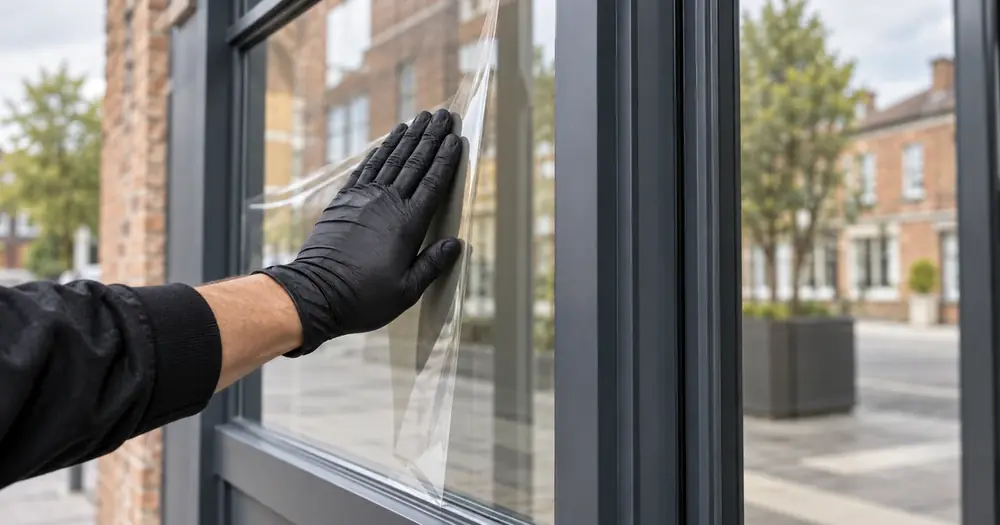
Protective film is a clear, sacrificial layer fitted to the outside of the glass. When someone scratches or etches it, the damage stays in the film, which is peeled off and replaced for a fraction of what restoring or replacing the pane underneath would cost.
- 1
Prepare
The pane is cleaned back to bare glass and any tired old film is stripped.
- 2
Fit
Film is cut to the visible glass and applied wet, with the edges finished tight to the frame.
- 3
Take the hit
Scratches, marker and etching land on the film instead of the glass.
- 4
Swap the sheet
A damaged sheet is peeled off and renewed, often during a routine visit.
Film suits any window that has been etched before, because etching tends to come back to the same glass. It's close to invisible from the street, lasts for years on shaded glass, and fits lift doors, balustrades and shelter panels as well as shopfronts. Sun-facing glass wears it faster, so replacement dates go into your site records.
What if it's paint or marker on glass instead?
Paint and marker on glass are the easy version of this job. They sit on the surface, so a sharp blade held flat on wet glass, plus a glass-safe solvent for any ink left behind, usually clears them in one visit with no polishing at all.
+What works on glass
- A new blade on a scraper, kept flat and used only on wet glass
- A glass-safe solvent for marker ink sitting in fine scratches
- Working in from the edges so paint doesn't smear across the seals
- Cleaning the frame and rubber seals, which often hold paint too
−What damages glass
- Any blade on a coated, tinted or filmed face
- Scraping a dry pane, where trapped sand scores the surface
- Steel wool, scourers or abrasive creams
- Strong strippers near seals and powder-coated frames
Scratched glass, sometimes called scratchiti, is a different problem again. Keys and stones leave grooves rather than pits, and deep grooves are handled like deep etching: we test, polish if the depth allows, and recommend a new pane if it doesn't.
How do I send photos of etched glass?
Take one photo straight on and one at an angle with light behind the glass, put a coin or ruler in frame for scale, and add a close-up of the corner stamp if you can find it. We reply with whether it can be restored, a price, and the alternative.
- Shoot from outside and inside if the etching is on both faces
- Early morning or late afternoon light shows etching best
- Tell us how many panes are affected and roughly how big they are
- Mention any coating or tint, or whether the glass feels different on one side
Photos matter more for glass than for any other surface, because the depth of the etching decides everything. When the marks are hard to capture on a phone, we'll inspect in person before quoting. Prefer a general enquiry form? Get a quote works for glass too.
Show us the glass
What do shop owners want to know about etched glass?
Can all etching be removed?
Is replacement cheaper?
What is protective film?
Etched glass? Two photos will tell us most of it.One straight on, one at an angle. We'll say whether it polishes out or needs a new pane.